Modern Foreign Languages (Spanish)
Discovering New Languages, Cultures and Ways to Communicate
At Winford Church of England Primary School, we believe that learning another language opens doors to new experiences, cultures and opportunities.
Our Modern Foreign Languages (MFL) curriculum encourages children to develop a curiosity about languages, build confidence in communicating with others and appreciate the diversity of the world around them.
We want children to enjoy learning a new language, develop the foundations for future language learning and recognise the value of communicating with people from different backgrounds.
Our Christian vision, Together we Flourish, and our school values of Aspire, Belong and Care are reflected in our approach to language learning. We encourage children to challenge themselves, appreciate different cultures and develop respect for the languages and traditions of others.
Our Spanish Curriculum
At Winford, Spanish is our chosen Modern Foreign Language.
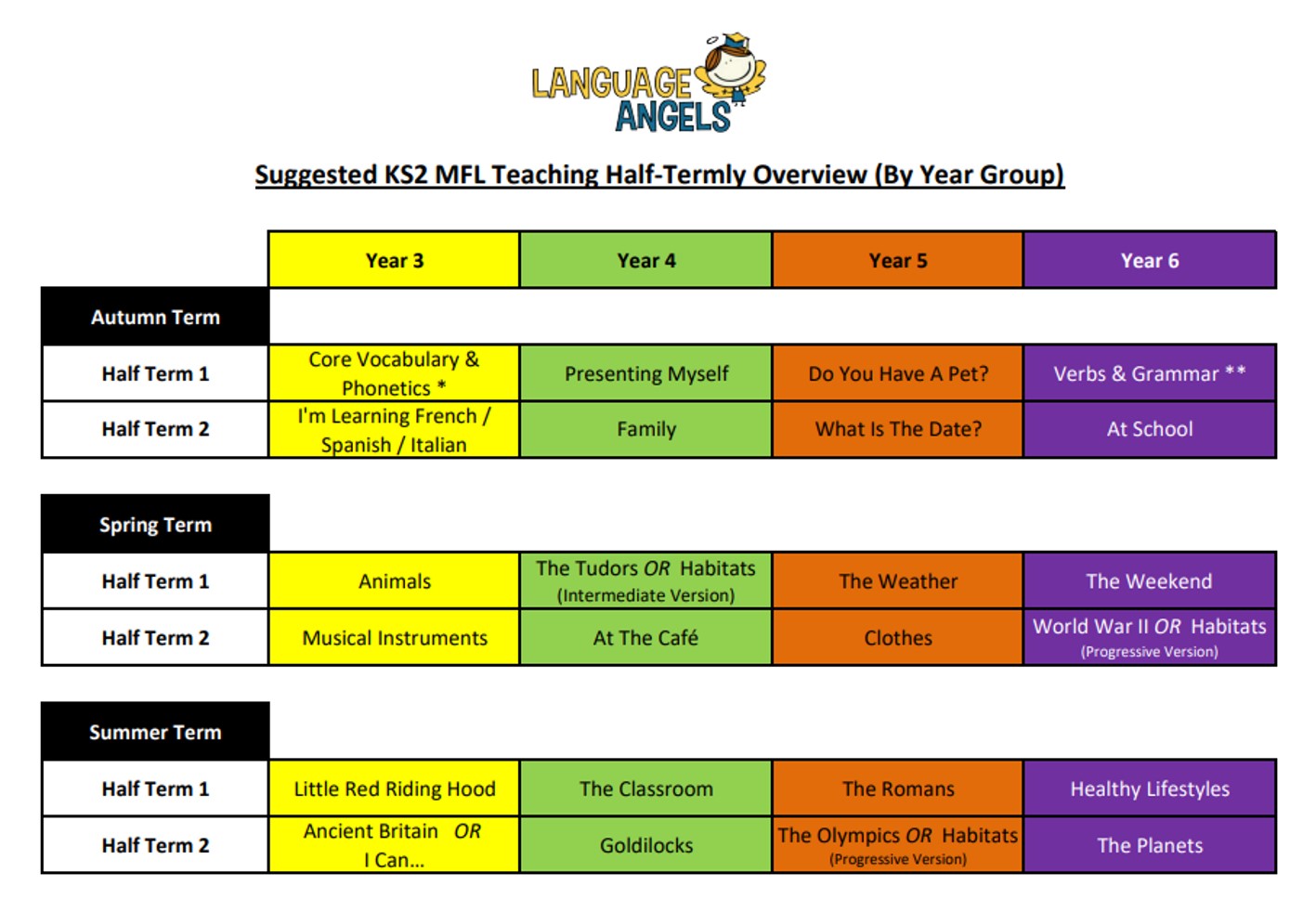
We use Language Angels, an online language teaching resource, to support the planning and delivery of our Spanish curriculum.
Language Angels provides structured and progressive learning opportunities, helping children develop their understanding of Spanish through speaking, listening, reading and writing.
Our aim is for children to develop the confidence to communicate in Spanish, understand simple spoken and written language, and begin to express their own ideas.
Through Spanish lessons, children learn to:
-
Listen carefully and understand spoken Spanish.
-
Develop accurate pronunciation and intonation.
-
Speak confidently using words, phrases and sentences.
-
Ask and answer questions in Spanish.
-
Read and understand familiar vocabulary and simple texts.
-
Write words, phrases and increasingly complex sentences.
-
Develop an understanding of Spanish grammar.
-
Explore Spanish-speaking countries and cultures.
-
Recognise similarities and differences between languages.
We want children to enjoy the challenge of learning a new language and develop the confidence to use their knowledge in different situations.
Developing Language Knowledge and Skills
Our Spanish curriculum develops children's skills across four important areas of language learning.
1. Listening
Understanding Spoken Spanish
Children develop their ability to listen carefully and recognise familiar Spanish words, phrases and sentences.
They learn to respond to questions, follow instructions and understand increasingly detailed spoken language.
Songs, stories, conversations and listening activities help children become familiar with the sounds and patterns of Spanish.
2. Speaking
Communicating with Confidence
Children learn to pronounce Spanish words accurately and develop confidence in speaking aloud.
They practise greetings, questions, conversations and everyday expressions.
As they progress, children develop their ability to speak in longer sentences, express opinions and communicate their ideas with increasing independence.
We encourage children to have a go, recognising that making mistakes is a natural part of learning a new language.
3. Reading
Understanding Written Spanish
Children develop their ability to recognise, read and understand Spanish vocabulary.
They begin with familiar words and phrases before progressing to sentences and short texts.
Children learn to use their knowledge of vocabulary, grammar and language patterns to work out meaning and develop greater independence as readers.
4. Writing
Expressing Ideas in Spanish
Children begin by writing familiar words and phrases before progressing to simple sentences.
As their confidence grows, they learn to adapt language, apply grammatical rules and create increasingly detailed written responses.
They develop their understanding of sentence structure, spelling and how Spanish differs from English.
Understanding Spanish Grammar
Grammar is an important part of learning to communicate accurately in another language.
Throughout their learning, children gradually develop an understanding of how Spanish works.
This includes:
-
Recognising nouns and their gender.
-
Understanding the use of articles.
-
Developing awareness of adjective agreement.
-
Learning common verbs and how they change.
-
Understanding simple sentence structures.
-
Using questions and responses.
-
Recognising similarities and differences between English and Spanish.
Grammar is introduced progressively and practised through meaningful language activities, helping children apply their knowledge when speaking and writing.
Spanish in Key Stage 2
Modern Foreign Languages is a statutory part of the National Curriculum in Key Stage 2.
At Winford, children in Years 3 to 6 learn Spanish through our Language Angels programme.
Year 3 – Building the Foundations
Children begin developing their confidence in listening to and speaking Spanish.
They explore familiar vocabulary and simple expressions, learning to recognise sounds, pronounce words and respond to basic questions.
The emphasis is on enjoyment, participation and developing confidence with a new language.
Year 4 – Developing Communication
Children build on their earlier learning, expanding their vocabulary and developing their ability to communicate using simple sentences.
They practise listening, speaking, reading and writing, becoming increasingly confident in asking questions and sharing information.
They begin to recognise and apply basic grammatical patterns.
Year 5 – Extending Language Skills
Children develop a wider vocabulary and become more confident in expressing their ideas.
They learn to understand and construct more detailed sentences, develop their grammatical knowledge and use familiar language in different contexts.
Children are encouraged to become increasingly independent when reading, writing and speaking Spanish.
Year 6 – Preparing for Further Language Learning
Children consolidate and extend their knowledge of Spanish, developing greater confidence and accuracy.
They practise communicating through longer sentences, conversations and written activities.
By the end of Year 6, we want children to have a secure foundation in Spanish and a positive attitude towards learning languages as they move on to secondary school.
Exploring Languages and Cultures
Learning Spanish is about more than developing vocabulary and grammar.
It also provides opportunities for children to learn about the countries, cultures and communities where Spanish is spoken.
Children develop an appreciation of different traditions, celebrations, customs and ways of life.
They learn that Spanish is spoken in many countries across the world and that language is an important part of people's identity and culture.
These experiences help children develop curiosity, respect and a broader understanding of the world.
Building Confidence Through Language Learning
We recognise that learning a new language can feel challenging, particularly when children are asked to speak aloud or try unfamiliar sounds.
Our approach encourages children to participate, practise and develop confidence over time.
Through songs, games, repetition, conversations and interactive activities, children have opportunities to use Spanish in an enjoyable and supportive environment.
We celebrate effort and progress, helping children recognise that learning a language takes practice, perseverance and a willingness to try.
This reflects our school value of Aspire, encouraging children to embrace new challenges and develop confidence in their abilities.
Helping Children Know More and Remember More
Our Spanish curriculum is designed to develop knowledge and skills progressively throughout Key Stage 2.
Through Language Angels, children revisit important vocabulary, grammatical structures and language patterns, helping them build on their previous learning.
Teachers use regular opportunities for listening, speaking, reading and writing to reinforce understanding.
Repetition, retrieval activities, songs and practical language tasks help children remember and apply what they have learned.
As children progress, they become increasingly confident in using familiar language in new situations.
Supporting Every Learner
We believe that every child should have opportunities to enjoy and succeed in learning Spanish.
Teachers adapt learning to meet individual needs through approaches such as:
-
Visual resources and picture prompts.
-
Songs, games and interactive activities.
-
Clear modelling of pronunciation.
-
Repetition and opportunities to rehearse language.
-
Vocabulary banks and sentence scaffolds.
-
Paired and small-group speaking activities.
-
Additional support and challenge where appropriate.
Our aim is for every child to develop confidence and experience success as a language learner.
How Parents Can Support Spanish at Home
Families can support children's language learning in simple and enjoyable ways, even if they do not speak Spanish themselves.
-
Practise greetings – Encourage children to use simple Spanish words and phrases.
-
Learn together – Ask your child to teach you some of the vocabulary they have learned.
-
Listen to Spanish songs – Explore music and nursery rhymes in Spanish.
-
Explore Spanish-speaking countries – Find them on a map and learn about their cultures and traditions.
-
Play language games – Practise numbers, colours and familiar vocabulary.
-
Celebrate effort – Encourage children to try speaking Spanish without worrying about making mistakes.
-
Notice languages around you – Discuss the different languages spoken in your community and across the world.
Curriculum Information
Our Modern Foreign Languages curriculum follows the National Curriculum for England, supported by the Language Angels Spanish programme and the Lighthouse Schools Partnership's curriculum intentions.
The curriculum provides a progressive approach to developing children's listening, speaking, reading, writing and grammatical knowledge throughout Key Stage 2.
Further information about our curriculum can be found in the documents below.
Spanish Skills and Progression Grid
View Year Group Curriculum Overviews
Together we Flourish
Aspire • Belong • Care
Learning new languages, discovering different cultures and communicating with confidence.